

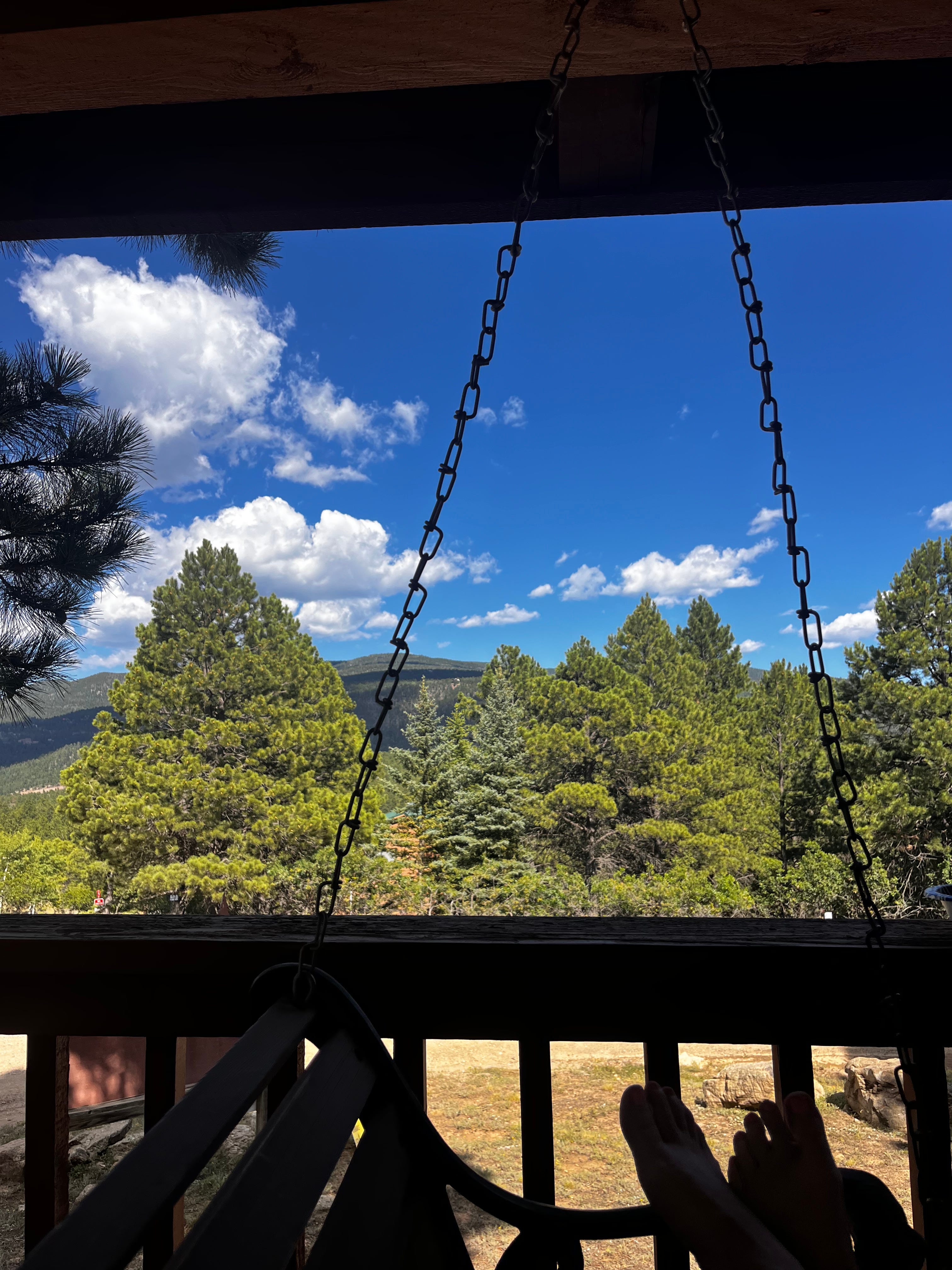
Today, I’m writing to you from a porch swing at a cabin in the mountains, far from the extreme Oklahoma heat back home. I’ve spent this week watching my kids slow down to examine rocks on a family hike, ask our river rafting guide a hundred questions, and stop to notice the wildlife that crosses our paths. Kids are naturally so curious, especially in a new environment. But I’ve been thinking that curiosity isn’t just a whimsical trait that I see in my kids’ lives. Curiosity can also save lives.
Earlier this month, I caught a medication error that followed a patient home after she left the hospital. I noticed it simply because I slowed down and asked one more question.
The patient had spent many days in the hospital, following a serious injury. During that time, one of the medications she required was an opioid used to control pain. Patients are started on opioids for a specific reason, and they need a careful plan to help them discontinue them safely as their condition improves.
Over many years practicing as a clinical pharmacist in the hospital, I have developed countless opioid taper plans for patients leaving the ICU, battling cancer, or navigating other complex illnesses. It is work that pharmacists are well trained to do.
However, familiarity can also lead to dangerous assumptions. Experience can slowly start to convince us that we’ve seen this story before and that we already know the outcome. It can tempt us to move forward with a plan before slowing down to ask what information might be missing.
I was consulted to advocate for this particular patient and to work with her medical team on a plan to help her taper off her opioid. I collaborated with her physician, and all was going well with her plan.
And then, she was discharged home.
It was a busy day with many moving parts. The discharge paperwork was completed. The prescriptions had been sent to the pharmacy and were even delivered to the patient’s bedside. Neatly tucked into a bag, the medications were handed to the family, along with discharge instructions. They were finally going home, after what had been a grueling few weeks.
That evening, I called to check in. My plan was to review the medications and to make sure the family understood the taper plan that her physician and I had created together.
When I’m counseling a patient or family, I find it helpful to lead with questions instead of assumptions. (You wouldn’t believe the things I’ve learned over the years by asking patients open-ended questions, instead of informing and confirming the plan.) So, instead of simply reviewing the medication plan, I began asking questions. This is a crucial step to gathering information and identifying any gaps that need addressed.
It was only after asking the family member additional questions that I realized a significant error had been made. The wrong opioid prescription had been sent home with this patient. (Extended release and immediate release are not the same; this is an especially important distinction for this particular class of medications.)
A major error was caught with a simple pause and a followup question. I was then able to make a few phone calls to report and resolve the error with the appropriate providers.
While medication safety does require specific training and qualifications, it also requires curiosity and a willingness to question the assumption. The provider who made the error admitted to me that they had originally questioned the prescription, but ultimately had not slowed down enough to follow that quiet curiosity and investigate further.
There are so many moving parts in healthcare systems. Complex medication regimens, exhausted patients and caregivers, and a revolving team of providers. Care teams are often tasked with seeing more patients, filling more prescriptions, and turning over more beds than what is safely possible. No matter how much expertise, we are still human. And humans make mistakes.
The safest providers (and people) I know aren’t the ones who know the most. They’re the ones who never stop asking questions. They aren’t afraid to take one more look, ask one more question, or pause for one more minute. Asking more questions is not a sign of skepticism or lack of knowledge. It’s a sign of humility and the realization that our own assumptions can cause harm to the very people we care for.
Pharmacist Note
Most medication errors don’t happen due to a lack of care. They happen because healthcare is complicated, people are tired, and our brains naturally fill in gaps with assumptions. One of the most valuable tools I’ve learned to use in my years of pharmacy practice isn’t a reference or a clinical guideline (though they are important!) It’s a willingness to slow down and ask one more question, “What am I missing?”
Practice Curiosity
This week, before assuming you understand a situation, slow down and ask one more question.
It might sound something like, “Can you help me understand what happened?” or “What am I assuming about this story, without actually knowing?”
Curiosity won’t eliminate every mistake, but it can often reveal what our assumptions overlook.
Your Turn
Have you ever caught an error or avoided a mistake simply because you slowed down and asked one more question? I would love to hear your story! Share your experience in the comments. We all have something to teach and something to learn from each other!
Keep looking beyond the label,
Leigh
{Helping you see the human behind the label, one small act of curiosity at a time}