

This week, I’m boarding a plane for Chicago, where I will be speaking at a pediatric pharmacist conference. My bags are packed, and I’m looking forward to a few days of blissful fall weather (at least according to the weather forecast.)
While packing and thinking about Chicago, I was taken back to an eye-opening conversation I had years ago about this city… and the “most dangerous place.”
This conversation involved a specific patient I helped care for years ago. She was a young girl with an aggressive disease that required a bone marrow transplant. Like so many other patients I’ve met during my years working in pediatric oncology and bone marrow transplant, this child’s parents had taken drastic sacrificial measures to ensure their daughter received the care she needed.
Many families are willing to move Heaven and earth to seek the life-saving treatment their child needs in situations like hers. But this family actually did move Heaven and earth.
They boarded a plane in their Middle Eastern home and left everything behind to move across the world in search of a cure for their precious girl. The father left his prominent position in their home country to travel with his wife and children to land humbly in the middle of rural Oklahoma, where this family spoke very little English. They placed their trust in medical experts they had never met, filled with hope for ultimate healing.
When a child comes into the hospital to receive a bone marrow transplant, they don’t just come for a hospital “stay.” They move in. Parents, siblings, and patients bring pieces of their life from the outside world, knowing that the hospital will be their home for many months ahead. Due to the long-term nature of this complex process and high level of care, medical teams get to know these families extremely well.
With this family in particular, I spent time trying to learn new words in their home language, and they were equally eager to practice English as I met with them daily to discuss their daughter’s treatment plan.
During one particular conversation, I asked the father (who spoke the most English) about their journey to the U.S. and what impressions they had so far. He began to describe in detail about the fear he had about life in the U.S. before coming. The U.S. was filled with gangs, he said. So much violence in the streets, that he had feared for his family’s life upon landing in Oklahoma City. It was the most dangerous place.
I was instantly confused and intrigued. This family came to the U.S. from a part of the world where war and civil unrest were seemingly the norm. And yet, he feared the violence in this place?!
He went on to explain that his national news station back home often showed brutal images of devastating street shootings in Chicago, that were specific to gang violence likely occurring within only a few blocks in the entire city. It seemed like the most dangerous place. This perspective was based on the only media exposure this family had to life in the U.S. previously.
So, when this family landed late one night in Oklahoma City and checked into their hotel on our medical center campus, the father rushed his family in and locked the door. He recalled that they hadn’t eaten dinner and were so hungry, but that it was dark outside. Based on the only media they had been shown about this country, they were certain that they should stay inside to avoid being shot while walking down the street. They felt wise to wait until daylight to venture outside.
I was stunned.
How often do we each make assumptions about a place or a people group, based on a small snapshot and perspective that may be taken completely out of context?! I suddenly questioned what I knew about the place this family called “home.” That they were willing to leave a country I had considered to be more “dangerous” and move across the world to a medical center campus where I feel “safe” to seek life-saving treatment for their daughter…all the while fearing for their own lives… impacted me deeply.
Thankfully, our international guests quickly realized that their fears of widespread gang violence was not a major concern here. But what if they had let that fear and assumption stop them from traveling to the place where their daughter received life-saving treatment?!
We went on to have more meaningful conversations about our misconceptions about each other’s cultures. Cross-cultural translation was not always easy, and we faced many logistic challenges during this family’s many months here; but ultimately, this precious girl not only received the care she needed, and our medical team also learned so much.
I’m boarding a plane to Chicago this week. If I had only seen the same news footage that this family had seen, I would also fear for my life. I would likely not have agreed to speak at this conference at all.
What assumptions do we make about others, based on media, hearsay, or even our own experiences? How often do we ask others about their experiences and actually listen?
Where is the most dangerous place? Our assumptions about other cultures, people, and places. I’ve been to that dangerous place, and I don’t ever want to go back.
I’m continuing to learn about the power of conversation with people who are not like me… those who come from different beliefs, cultures, and backgrounds. I have so much to learn. And I bet you do, too.
Okay, I’m off to Chi-town. Where I don’t plan to stay locked in my hotel room.
- Dr. Peek
P.S. Yesterday was National Daughter’s Day as well as World Pharmacists Day. My role as a mom and a pharmacist are privileges that are not lost on me. I hope to teach my daughters the importance of their role as global citizens in a diverse world.
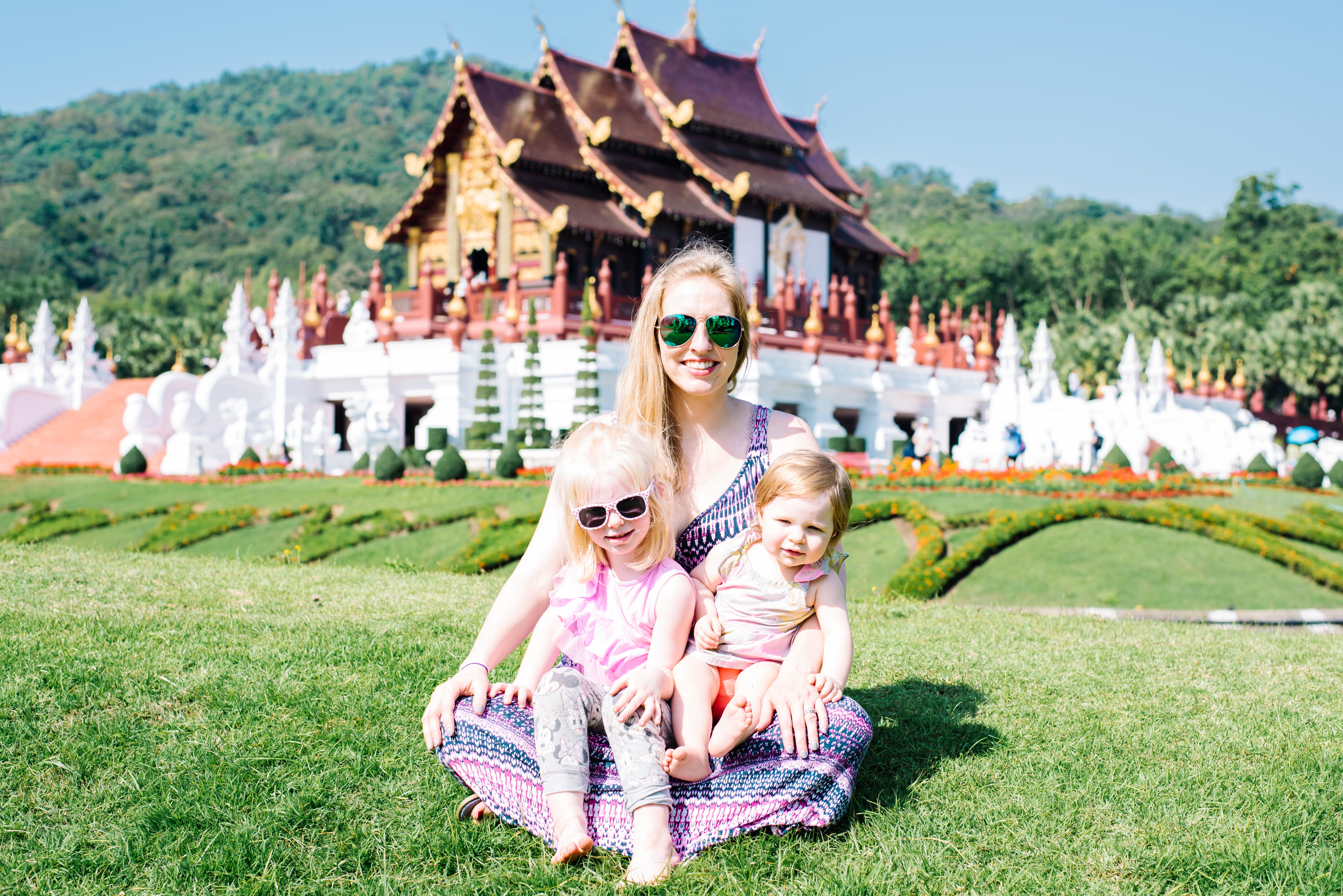
Photo: Thailand, 2017 with my 3 daughters on their first international trip (3rd daughter still in utero :)
I totally agree. I'm glad you reached out to that family. You're a good representative of our country.
I once made a bit of snap opinion on a young man who came into my classroom at the High School. He was Native American (as am I) had long hair, some makeup, purple hair and different clothes.
He turned out to be a very nice young man. I enjoyed visiting with him.
He taught the teacher "Don't make snap judgements by appearances!"
I didn't make that mistake again.