

History has more than one truth. More often than not, history is written by a dominant culture. Their stories become known as “truth.” - Quote displayed at the First Americans Museum
This week, I had the honor of accompanying my daughter’s 3rd grade class on a field trip to the First Americans Museum in Oklahoma City. This new museum honors “one place, many nations,” and highlights the collective histories of the 39 distinctive First American Nations in Oklahoma today. The word OKLAHOMA literally means “red people” in Choctaw, and Native American influence is an important part of our state’s history and current culture.
Amidst nationwide efforts to “ban” historical literature, sharing of historical facts, and silencing the voices of non-dominant cultures, I was pleased when this museum recently opened it’s doors as the first of it’s kind in our country. I was also pleased that our school chose this venue as a field trip. Our children attend an international language immersion school, which emphasizes their role as a global citizen. The diversity and multi-cultural education they are exposed to aligns with our family’s educational and faith values (and is beautifully counter-cultural to much of the narrative in our part of the country.)
Too often, in our society, “We don't talk about Bruno.” We don’t want to talk about the “black sheep” of the family, (or the country, or the world), so to speak. We don’t want to talk about atrocities of history that don’t paint dominant people groups in the best light. We shelter our children from viewpoints that don’t align with our preferred narrative, fearing it will “indoctrinate” them in so many undesired ways. We keep things vanilla, plain, simple…lest we mix in too many flavors that will taint their palette.
We don't talk about Bruno… but we should.
We should talk about privilege AND misrepresentation of different people groups. We should talk about historical events from multiple perspectives, not just the dominant culture. We should share hard stories from the past AND talk about the things we can learn from them.
Silencing voices and sweeping history under the rug does not protect our children. It leaves them vulnerable to repeat past mistakes and to lack compassion for people who are different from them. It breeds fear and not love.
The First Americans Museum was filled with beautiful music, intricately beaded tribal costumes, enchanting stories, and unique artwork. But it was also interwoven with the heartbreaking stories of what Native Americans have endured at the hands of their oppressors…and the resilience they have built within their communities.
During the final exhibit of our field trip tour, we heard a story of a family who was forced off of their home land and had to travel a long and brutal journey. Their little boy died along the way, and his family was unable to bury him. The boy in this story was 10. My daughter is 9. As I looked down, she had silent tears streaming down her face.
“Mom, I don’t like this at all,” she said. “I feel so, so sad. I don’t like hearing that all of this happened.”
So often, our instinct is to rush to our kids, to protect them from this cruel world, to shelter them in innocence. But this time, I resisted the urge.
“I feel sad, too…and it is an appropriate response to what we just heard,” I said. Of course, I don’t want my daughter to have to feel the weight of this world. I don’t like to see her cry. But in this case, something in me also felt grateful. Grateful that she “got it.” Grateful that this history was sinking into her heart in a way that made her feel. Grateful that her innocence allowed her to truly be open to hearing the viewpoint of a people group who suffered…without defending/justifying/dismissing their pain.
We ended up having a meaningful conversation with our museum docent after the tour, who noted my daughter’s emotional response and provided helpful ways to process. And later that night, perched on the edge of her bed, my daughter continued to ask thoughtful questions about our own European ancestors and what their role might have been.
This certainly wasn’t the first or last conversation we will have about difficult historical (and current) perspectives in our household. We don’t always say the right things, and the grownups in our house are always still learning too ; ) But as we allow ourselves to be curious and learn more about the world around us - right alongside our children- the more tenderness and compassion we (and they) hold for other people. It draws us closer in love, not further in fear.
In our home, our faith leads us to action. We follow a Jesus who never sugar-coated the realities of this brutal world. We serve a King who came to humbly serve the least of these. He entered the world through the most humble of circumstances. He always looked for the oppressed and broken-hearted people. He didn’t shy away from engaging difficult circumstances and conversations. He demonstrated the power of stories and shared human experiences. And he always did so in love.
So, while the world around us wants to silence certain narratives, ban certain books, and avoid some educational topics, we will just be over here… “talking about Bruno…” and difficult history (and current events) with our own kids.
May we be as curious and compassionate as them.
Always learning,
Leigh
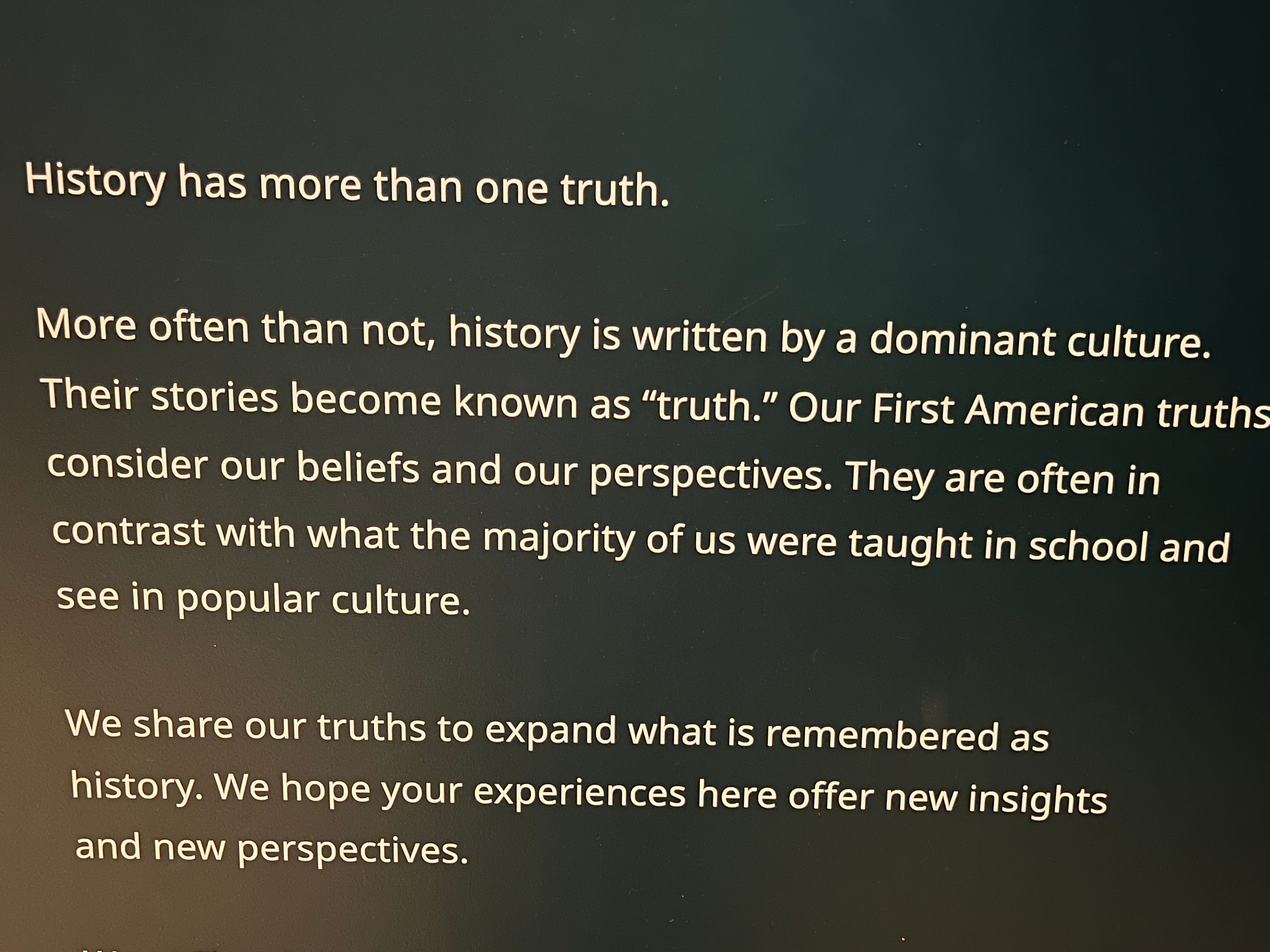
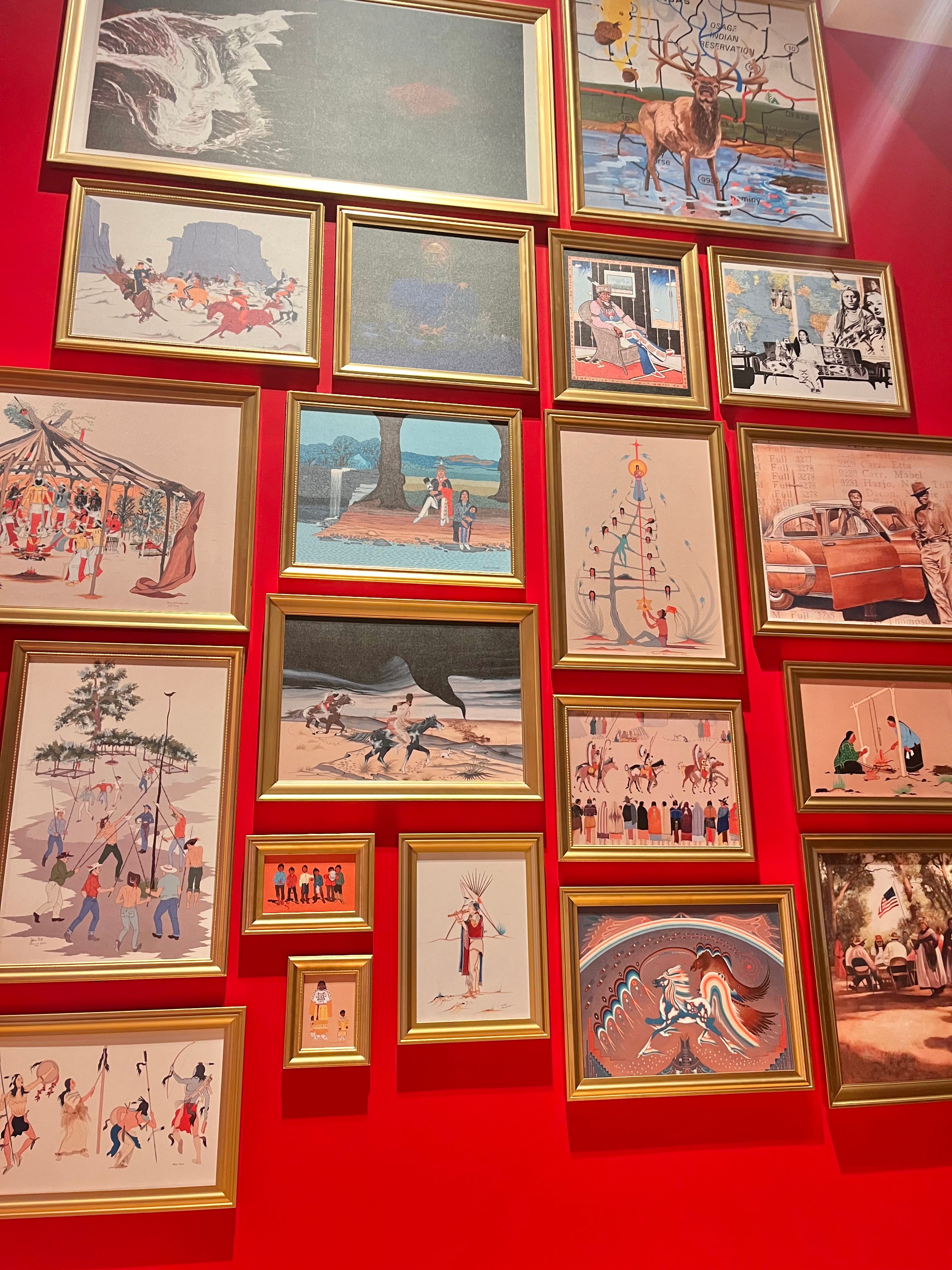
Image: Display at the First Americans Museum in OKC